
 iMonnit Portal

Top Story
The State of Monnit: Strong Growth, Innovation, and an Exciting Road Ahead

By Brad Walters, Founder & CEO
As we look across today's global economy, there is certainly no shortage of uncertainty. Geopolitical tensions, ongoing conflicts, and shifting markets continue to pose challenges worldwide. Yet one thing stands out to me: the business community's resilience.
Whether we're working with partners in Europe, customers across Africa and the Asia-Pacific, or organizations throughout North, South, and Central America, businesses continue to move forward. They're investing, innovating, and finding new ways to improve their operations.
One of the biggest drivers of that momentum is artificial intelligence. At Monnit, we're especially interested in what I call operational AI. It’s the ability to transform operational data into smarter, faster business decisions.
Across our ecosystem, suppliers, manufacturing partners, resellers, integrators, and customers are exploring how AI can create value. The pace of adoption is unlike anything I've seen in my career, and we're actively evaluating ways to incorporate practical AI-driven capabilities into the Monnit experience.
From a business perspective, Monnit has never been in a stronger position.
We're seeing growing adoption across data centers supporting AI infrastructure, manufacturing facilities, cold-chain operations, construction sites, agricultural applications, and commercial facilities. Our ability to support a wide range of industries remains one of our greatest strengths, and new vertical-focused solutions are also on the horizon.
Our product roadmap is the most extensive in company history. Customers can expect exciting advancements, including our next-generation radio platform, more feature-rich gateways, new connectivity options, and a completely refreshed iMonnit user interface, which will enter beta testing later this year.
At the same time, we're continuing to invest heavily in quality. Last year, we launched a company-wide quality initiative that helped reduce product issues from the low double digits to the very low single digits. Customer satisfaction continues to rise, and our commitment to world-class customer support remains unchanged.
We've also strengthened our supply chain, expanded our team, and continue to attract talented people who want to build long-term careers at Monnit. That's something I'm incredibly proud to share.
Most importantly, we remain committed to operating responsibly, maintaining compliance, financial discipline, and the trust our customers place in us every day.
After more than 16 years, what excites me most, even more than the technology, is seeing customers use Monnit to protect products, prevent downtime, improve safety, and solve real-world challenges. That's what continues to motivate our team.
Thank you for being part of the Monnit community. We're excited about what lies ahead and look forward to helping you monitor smarter, operate better, and achieve more.
As always, if you'd like to connect with our leadership team, we'd love to hear from you at Corporate@Monnit.com.
Tech News
Get a Products in Development Recap
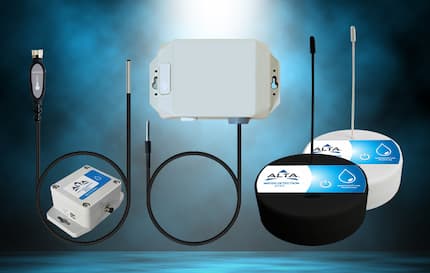
In this newsletter, we’ve highlighted several products in development and testing here at Monnit over the past year. Here, in no particular launch order, is a summary of these sensing solutions we look forward to bringing to market for you, our valued customers.
- All-In-One Cellular Sensors: These sensors combine sensing and cellular gateway capabilities in one device and chipset, offering energy efficiency and hassle-free, direct-to-cloud connectivity for easy deployment and data access.
- People Counter: This non-camera, millimeter-wave radar sensor counts people entering or exiting spaces, maintaining privacy while enabling accurate occupancy monitoring for security and resource optimization.
- Water Detection Disc: This low-profile, rechargeable, and water-tight sensor detects water presence or absence at 1.8 mm almost anywhere, providing early water leak detection to help prevent costly damage.
- NIST-Certified Detachable Sensor Leads: Hot-swap Standard Temperature, Low Temperature, and Humidity leads on compatible ALTA Sensor Bases to streamline your recertification and monitoring processes.
- Wi-Fi 6 Sensors: Highly efficient dual-band Wi-Fi 6 will be the connectivity standard for our next generation of Wi-Fi sensors. Expect even better device density handling, range, and signal quality.
- Edge Gateway 2.0: This new version will feature MQTT and Node-RED for more local control and deeper intelligence. You get more flexible, direct integration with a cloud, building management system, or local analytics platform.
- Wireless Food Probe 2.0: Automate cooking and compliance. Create up to 99 custom food profiles for items such as beef, poultry, or specialty dishes, with minimum and maximum thresholds, target temperatures, time requirements, and alerts.
Stay tuned to the Monnit Blog and this monthly newsletter as we roll out new products and continue to expand our Internet of Things (IoT) portfolio.
Software Spotlight
Simplifying Industrial Integration: Introducing the Monnit Modbus TCP Utility

Integrating wireless sensor data into local automation and control systems can be powerful, but it hasn't always been simple. Monnit is developing the new Monnit Modbus TCP Utility, a software tool designed to make configuring and deploying Modbus TCP integrations faster, easier, and more intuitive.
Built to work with Monnit ALTA® and ALTA XL® Ethernet Gateways and others, the utility helps you bridge the gap between wireless IoT monitoring and local control systems. Whether you're connecting temperature sensors to a building management system for better facility management, integrating water detection into pump controls, or feeding environmental data into industrial automation software, the utility streamlines the setup process and eliminates many common configuration challenges.
The Monnit Modbus TCP Utility provides a local-first approach, allowing you to communicate directly with gateways over their network without relying on cloud services. It also translates complex Modbus register values into human-readable information, helping you quickly verify sensor operation and data accuracy.

Key Features & Benefits
- Guided Configuration: Walks you through Modbus TCP setup and helps avoid common integration roadblocks.
- Local Data Access: Retrieve and view sensor data directly from Monnit Gateways on your local network.
- Data Interpretation Tools: Converts raw Modbus register values into understandable engineering units.
- Supports Automation Projects: Easily connect sensor data to PLCs, SCADA systems, building controls, and other automation platforms.
- Cross-Platform Compatibility: Available for Windows, macOS, and Linux environments.
- Local Logging & Reliability: Store and review sensor information locally for troubleshooting and operational visibility.
For customers using industrial automation, facility management, energy monitoring, data center management, or water infrastructure systems, the utility provides a simpler path to integrating Monnit Wireless Sensor data into existing workflows.
Interested in helping shape the future of the Monnit Modbus TCP Utility? We're currently seeking beta testers. To participate and provide feedback, contact Marketing@Monnit.com. Your insights will help us refine the utility and deliver an even better integration experience for customers worldwide.
CX Shoutout

Recent News
Tech Tip
Make Every Heartbeat Count: What They Do

To understand how Monnit Sensors and Gateways work, alert, and report in iMonnit, you need to understand Heartbeats. They’re the timed intervals you set for how often sensors and gateways transmit data.
By default, our sensors check in every 120 minutes, but you can fine-tune a Heartbeat to 10 minutes with iMonnit Premiere or even more frequently with other Monnit Software. In this Monnit Knowledgebase video and article, iMonnit Heartbeats Explained, we share what you need to know about Heartbeats.
For example, did you know that sensors take sample assessments to monitor thresholds between Heartbeats? If a threshold is breached, the sensor enters the Aware State and checks in at the set Heartbeat frequency. Gateways also support Heartbeats and can immediately push urgent data if a sensor detects an exception.
In the video or article, you will see:
- How to edit sensor Heartbeats and Assessments Per Heartbeat settings.
- Why gateways have a Force Transmit on Aware setting, and how does it work?
- A detailed example of the timing and procedures of how a sensor Heartbeat works.
- How Heartbeats optimize battery life to balance performance and power usage.
Pro Tip: Configure sensor and gateway Heartbeats to match your monitoring needs and response times.
Upcoming Events

IoT Consultations

Monnit On-Demand Webinars

All trademarks are property of respective owners. Copyright © Monnit Corp. All rights reserved.
Monnit Corporation | 801-561-5555 | monnit.com


